 Before and after 1835
Old gods and the missionaries
Before and after 1835
Christianity spread through Pacific networks and local decisions.
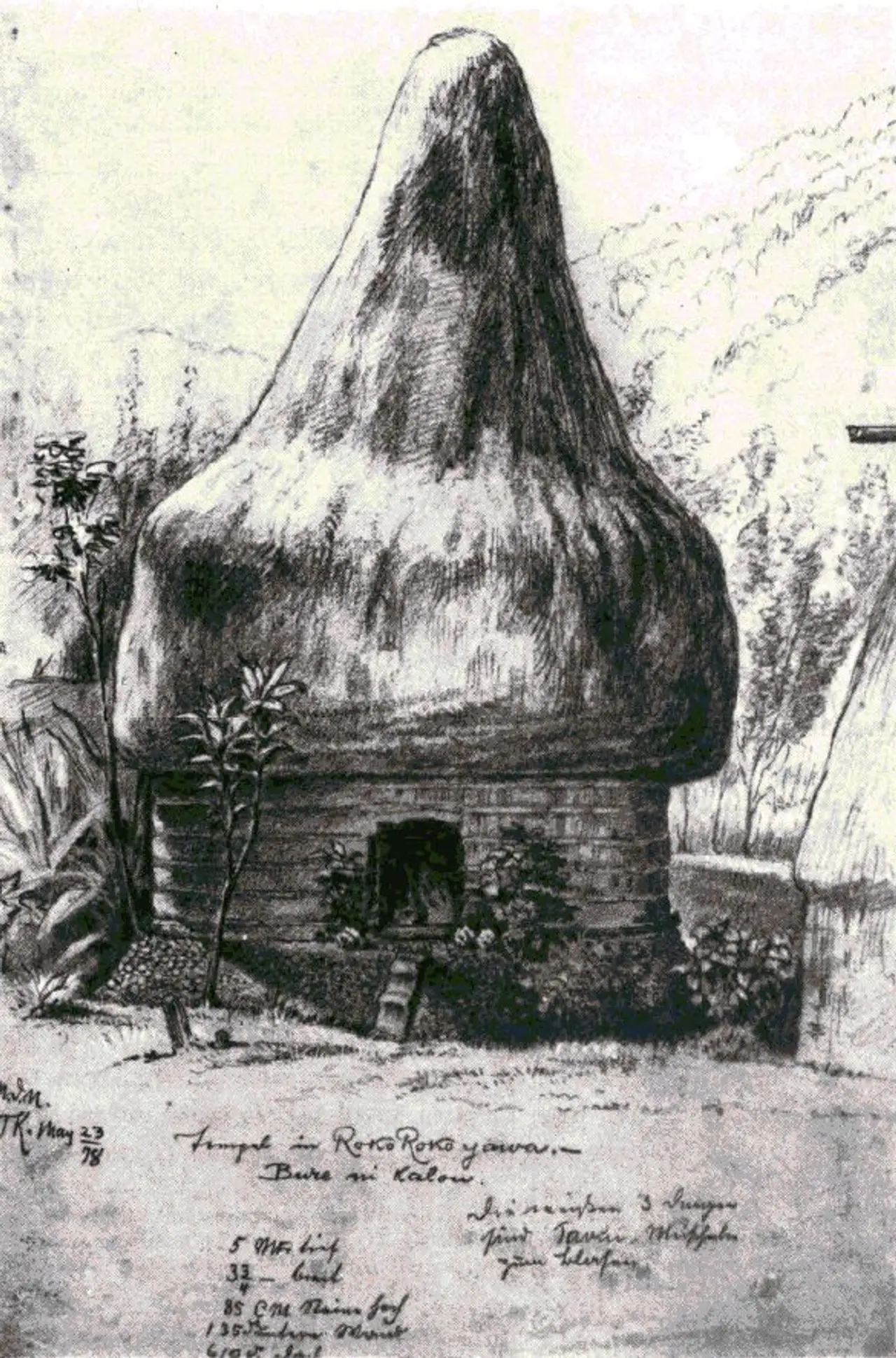
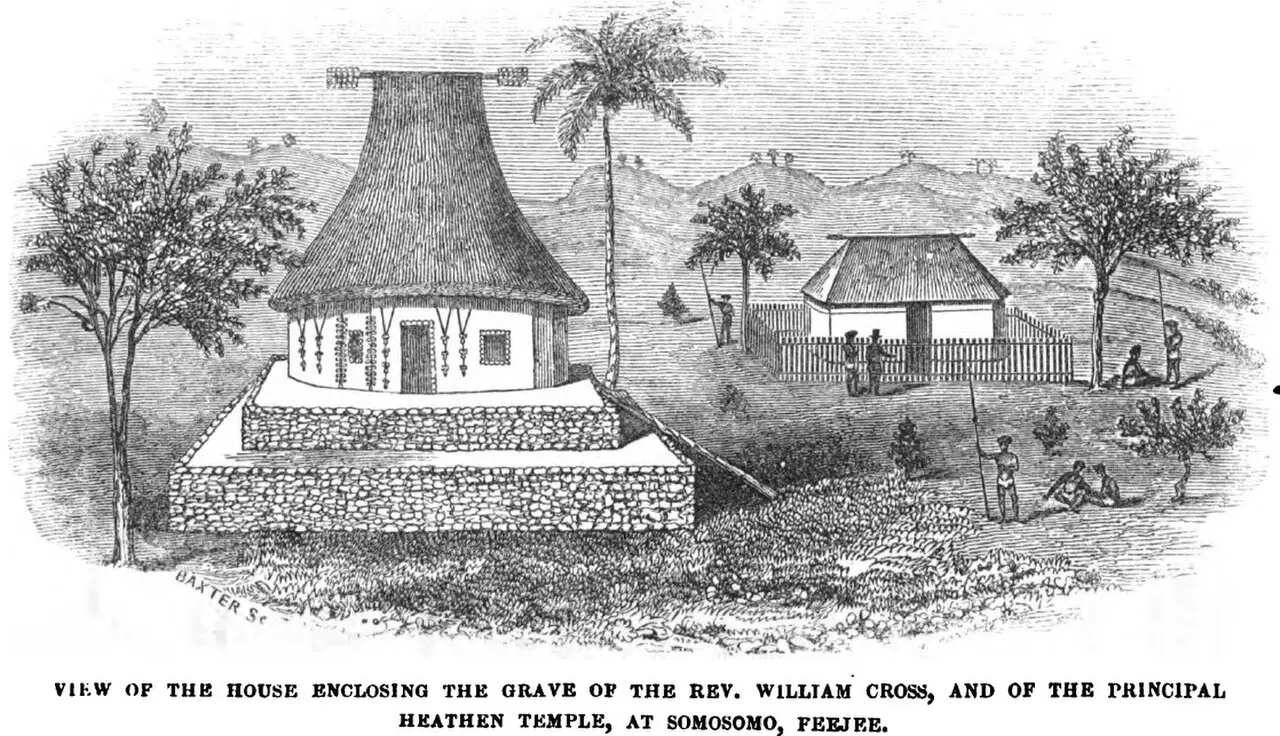
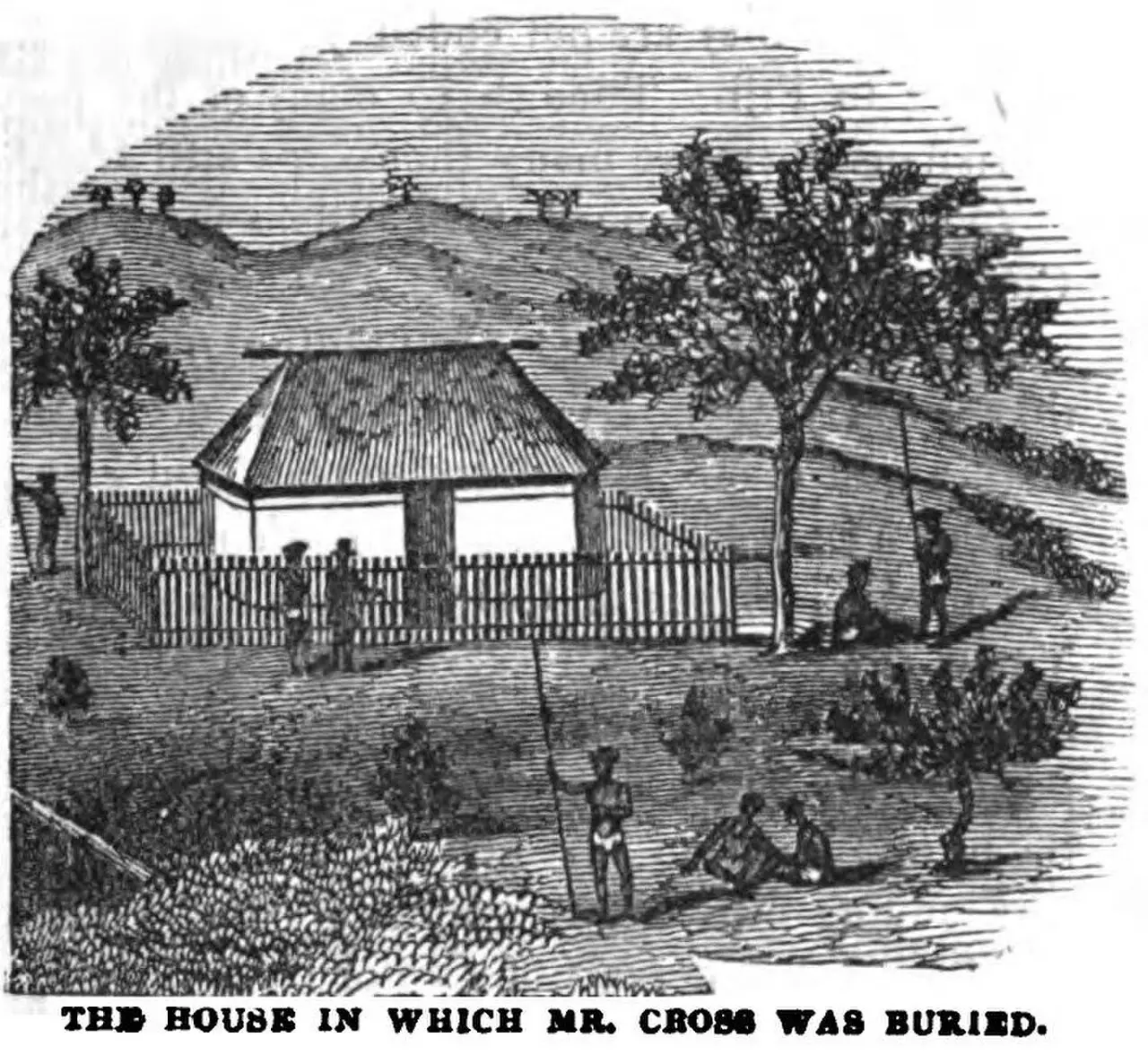
Before conversion, bete served as intermediaries with gods and ancestors, and sacred houses formed part of religious life. In 1835, Wesleyan missionaries William Cross and David Cargill arrived at Lakeba with support from Christian Tongans.
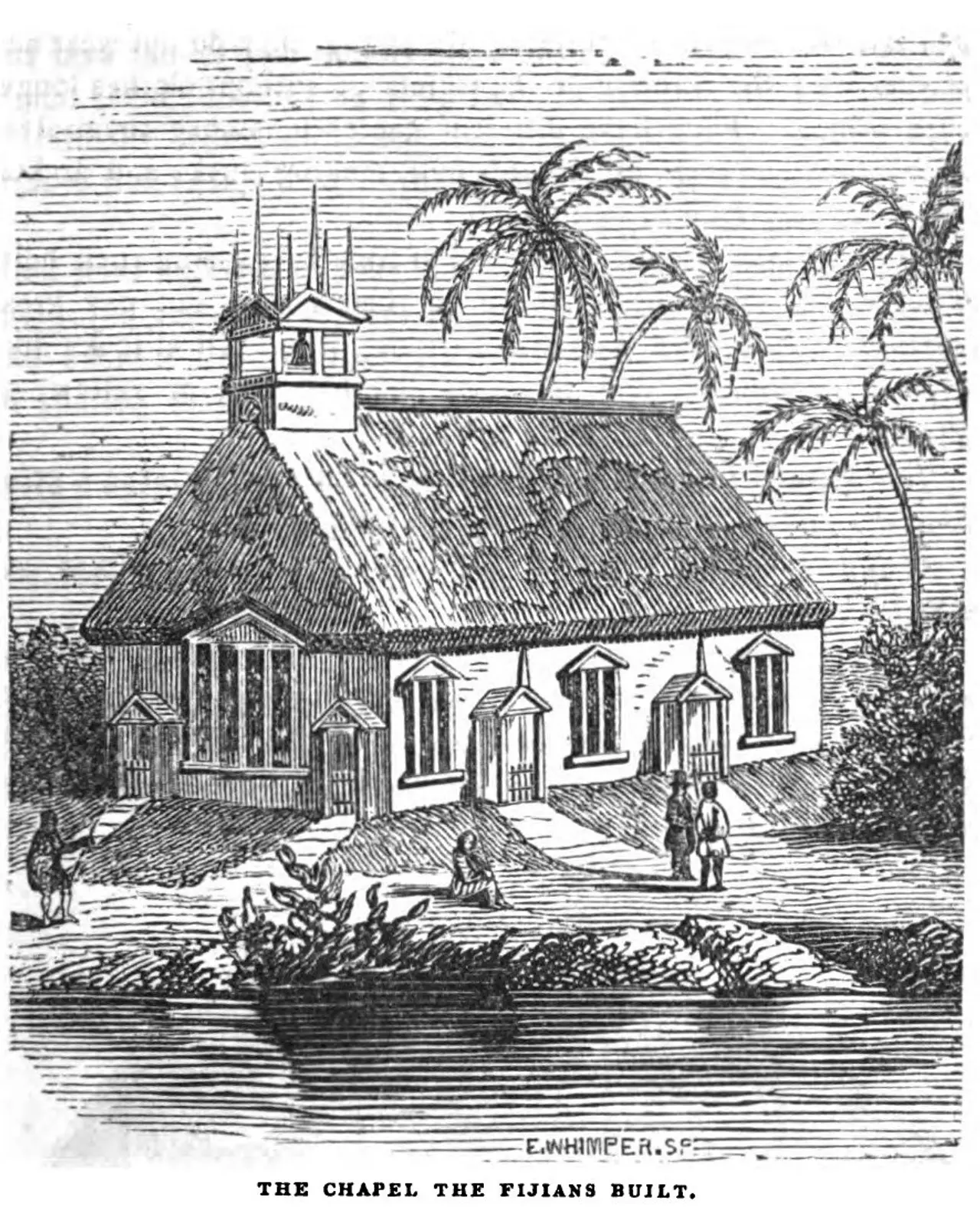
Teaching and conversion depended on relationships with communities and chiefs. Cakobau’s conversion in 1854 encouraged further conversions and Tongan support, but neither religious change nor peace followed everywhere at once. Different districts accepted, resisted or adapted new teachings on different timelines.
- Wikipedia: Fijian mythology ↗
- Wikipedia: Christianity in Fiji ↗
- Wikipedia: Thomas Baker ↗
- Cambridge MAA · Priests ↗
- Cambridge MAA · Missionaries ↗
- Cambridge MAA · Chiefdoms ↗
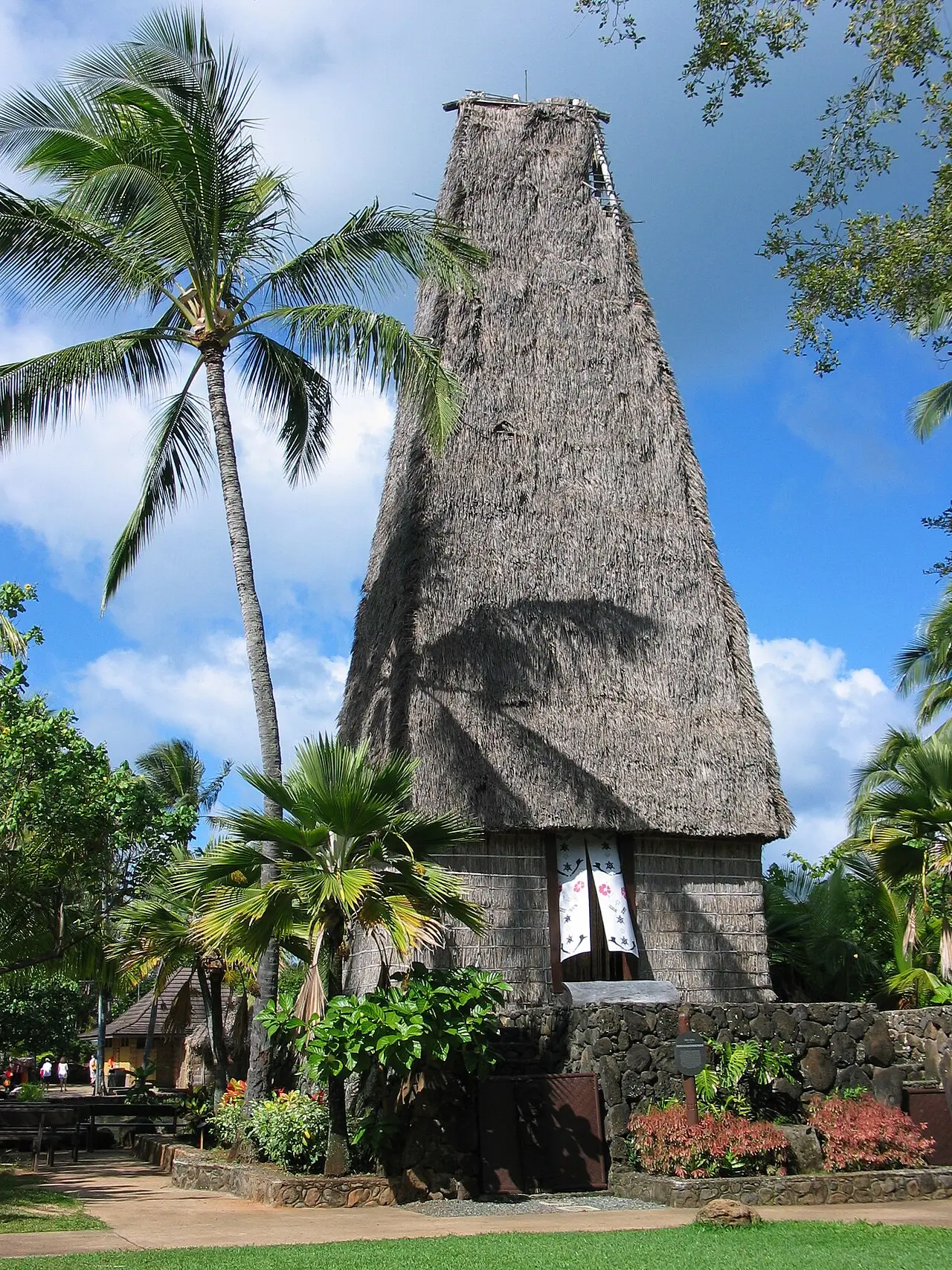
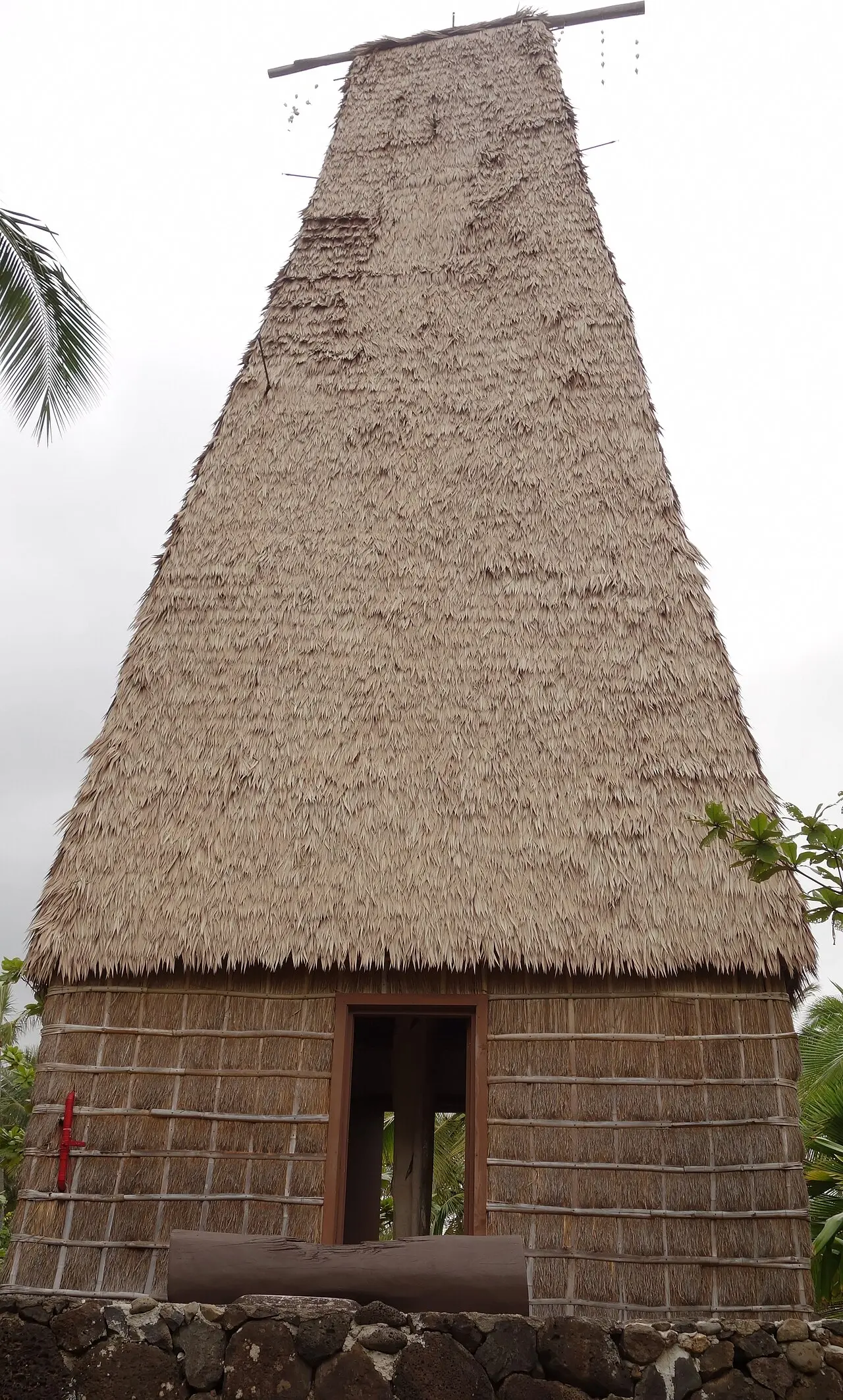
This pictureBure Kalu - A Fijian Temple at the Polynesian Cultural Centre in Hawaii. (2005) · Keith Pomakis · CC BY-SA 2.5 · record ↗
Chapter text is awaiting cultural and historical review.
 Dimau Group